Motlalepula: The Extraordinary Untold Friendship Between Queen Elizabeth II and Nelson Mandela
A Bond Beyond Royal Boundaries
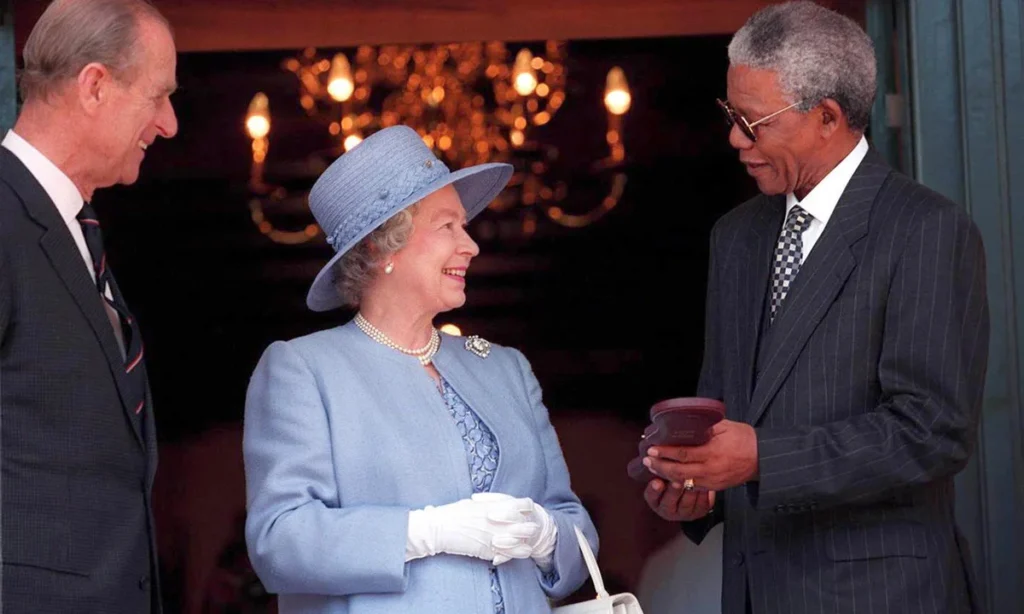
The relationship between Queen Elizabeth II and Nelson Mandela remains one of the most exceptional and deeply moving chapters in modern history. While royal protocol dictated that world leaders maintain a strict, formal distance from the British Monarch, Mandela stepped right through those boundaries. What they shared was not a cold diplomatic alliance, but a genuine, deeply affectionate friendship bound by mutual respect, shared values, and a profound understanding of public duty.
Breaking Protocol on a First-Name Basis
One of the most astonishing details of their connection was how they addressed one another. Nelson Mandela was famously one of the very few people on Earth outside the Royal Family who called the Queen simply by her first name, “Elizabeth.” In return, Her Majesty fondly called him “Nelson.”
Mandela’s former private secretary, Zelda la Grange, recounted a legendary moment during a visit to Buckingham Palace. Mandela walked straight up to the Monarch and casually said, “Oh, Elizabeth, you’ve lost weight!” Instead of taking offense, the Queen burst into a warm, joyous laugh. Mandela was also known to frequently compliment the Queen’s vibrant outfits and evening gowns—a charming behavior that would have been unthinkable for any other global politician.
“Motlalepula” – The Rain Queen
The deep respect Mandela held for the British Monarch was beautifully illustrated by the traditional African nickname he gave her: “Motlalepula,” which translates to “The One Who Brings the Rain.”
In South African culture, rain is viewed as one of the ultimate blessings. Mandela bestowed this title upon the Queen because her historic 1995 official visit to South Africa coincided with torrential downpours that miraculously ended a severe, years-long drought. To Mandela and his people, the Queen’s presence was a symbol of pure good fortune.
Dancing at the Royal Albert Hall
Their unscripted complicity reached its peak during Mandela’s 1996 state visit to the United Kingdom. While attending a grand concert at the Royal Albert Hall, Mandela, moved by the powerful rhythm of the music, suddenly stood up in the Royal Box and began to dance.
Public dancing in the Royal Box was strictly forbidden by centuries-old palace rules. However, instead of stopping him, Queen Elizabeth II broke her own strict protocol. She stood up right alongside her friend, swaying gently to the beat and smiling at him with absolute warmth and insider understanding.
A Deep Moral Alignment
Beyond the laughter, their bond was anchored in deep political respect. Mandela always deeply appreciated the Queen’s subtle yet powerful moral stance during the dark years of apartheid. While British Prime Minister Margaret Thatcher took a softer, more lenient approach toward the Pretoria regime, the Queen consistently refused to visit South Africa while segregation was in power, sending a massive moral signal to the world.
The two global icons didn’t rely on standard diplomatic channels to communicate. They frequently picked up the phone to call each other directly, sharing birthday wishes and discussing complex global matters. Because both icons perfectly understood the heavy weight of personal sacrifice and national duty, they allowed one another to completely drop the “official mask” and simply be close friends.