The Lost Crown of Athens: How Queen Elizabeth II Secretly Sheltered Greece’s Deposed King in London
A Crimson Carpet for a King Without a Throne
When London high society gathered for the glamorous wedding of Crown Prince Pavlos of Greece in 1995, the cameras captured a striking image. The late King Constantine II, who had lost his throne decades prior, greeted Queen Elizabeth II not with rigid state distance, but with warm cheek kisses and a deeply respectful, unscripted hand kiss.
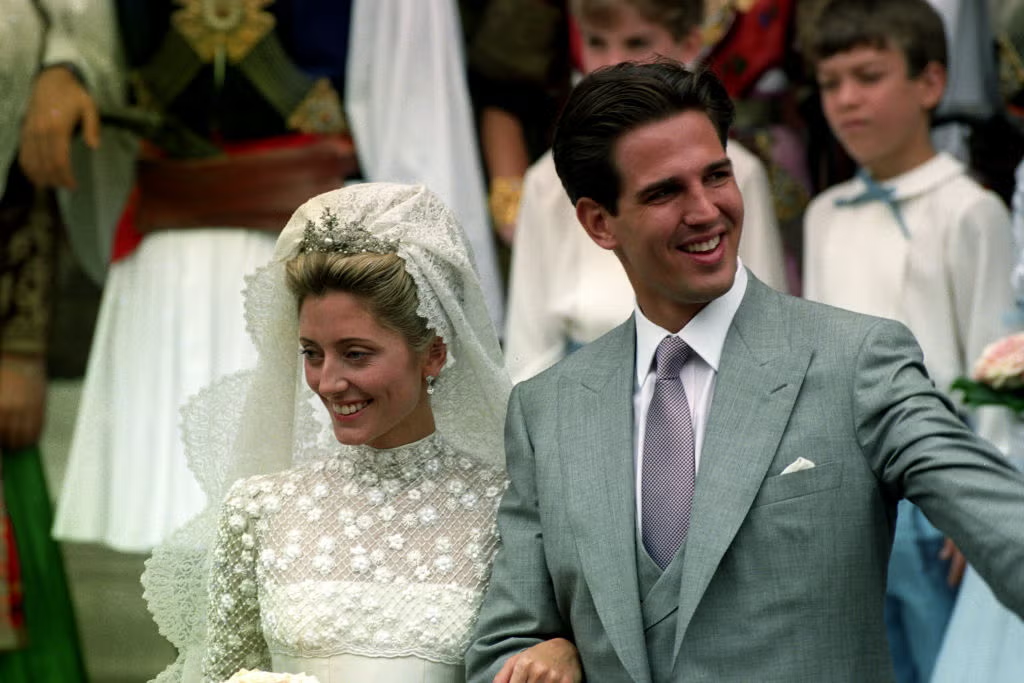
To the casual observer, it looked like a beautiful display of standard upper-class etiquette. But behind that single gesture lay a profound, multi-generational story of political downfall, secret rescue operations, and an unbreakable bond of loyalty that the British press rarely spoke about openly.
The Chaotic Night the Throne Fell
To understand why the Greek Royal Family spent nearly five decades living in London, one must travel back to the chaotic winter of 1967. King Constantine II, then a young and relatively inexperienced monarch, found himself trapped under a brutal military junta known as the “Colonels’ Coup”. In a desperate and bloody attempt to restore democracy to his homeland, Constantine launched a daring counter-coup.
The operation failed catastrophically. With vengeful military forces closing in, the King, his pregnant wife Queen Anne-Marie, and their infant children were forced to flee for their lives in the dead of night, flying a battered aircraft to Rome with almost zero fuel left in the tanks. By 1973, the monarchy was officially abolished, and a subsequent 1974 referendum slammed the doors of Greece shut on Constantine forever.
Prince Philip’s Fury and the British Sanctuary
While the rest of the geopolitical world turned its back on the deposed Greek monarch to maintain diplomatic ties with the new Greek government, Buckingham Palace reacted with quiet defiance. The bond between the House of Windsor and the House of Glücksburg was deeply personal. Prince Philip, Duke of Edinburgh, was born a Prince of Greece and Denmark on the island of Corfu. King Constantine was his first cousin once removed, and the treatment of his family by the Greek state reportedly infuriated Philip.
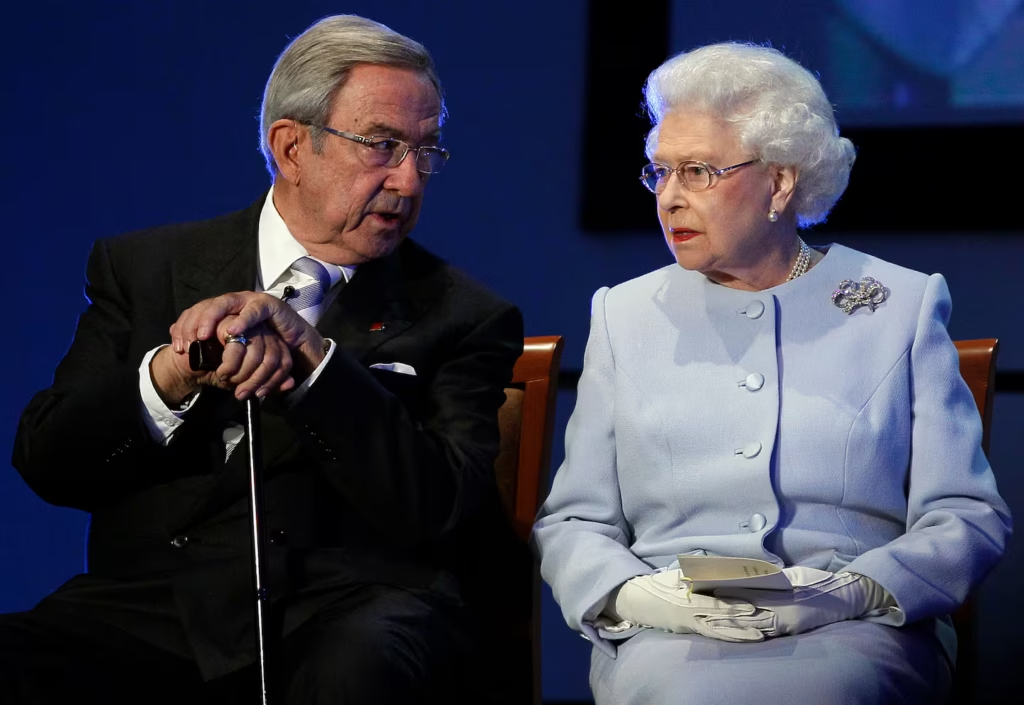
Under the quiet direction of Queen Elizabeth II and Prince Philip, the British Royal Family provided an immediate, secure sanctuary for the exiled Greeks in London. They didn’t just offer temporary political asylum; they welcomed them into the permanent inner circle of the British Monarchy.
The Hidden Suburb State and the Godfather Bond
With the tacit approval of the Queen, Constantine established a grand estate in Hampstead Garden Suburb, London. Supported largely by wealthy British-Greek sympathizers and private royal networks, the property operated almost like a mini-court in exile. Visitors were strictly expected to address the deposed leader as “Your Majesty,” a title the British Royal Family continued to use for him in private correspondence, completely bypassing standard diplomatic protocols.
The depth of this secret affection became set in stone when King Constantine was officially named as a godfather to Prince William. For decades, Constantine and his children moved seamlessly through high society, becoming the closest confidants to King Charles III and Diana, Princess of Wales.
The Ultimate Silence: Why the Queen Never Visited Greece
Perhaps the ultimate testament to the Queen’s quiet loyalty to her deposed cousin was a glaring historical detail that puzzled travel experts for decades: during her historic 70-year reign, Queen Elizabeth II visited over a hundred nations, but she never once set foot in Greece for an official State Visit.
Historians widely agree that this massive snub to Athens was a deliberate choice. Prince Philip harbored a deep resentment toward the nation that had once put his own father on trial and forced his family into exile in a fruit crate when he was a baby. By refusing to make an official visit to the republic that had banished Constantine, the Queen sent a powerful, unspoken signal of solidarity.
Turning the World Into a Stage
When King Constantine II finally returned to live in Greece in 2013 after 46 years of painful exile, he did so as a private citizen, cane in hand, completely stripped of his passport and properties.
But during his dark decades in the shadows, he was never truly a King without a country. Through the absolute grace and unshakeable loyalty of Queen Elizabeth II, London became his fortress, proving that true royal character isn’t measured by political power, but by the quiet choices made behind closed palace doors.