Behind Closed Doors: The Complex Relationship and Secret Tensions Between Queen Elizabeth II and Margaret Thatcher
Two Formidable Women at the Helm
For over a decade, from 1979 to 1990, Great Britain was famously governed by two incredibly powerful women. On one side was Queen Elizabeth II, the stoic Monarch dedicated to tradition, continuity, and national unity. On the other was Prime Minister Margaret Thatcher, the trailblazing “Iron Lady” known for her radical economic reforms and uncompromising demeanor.
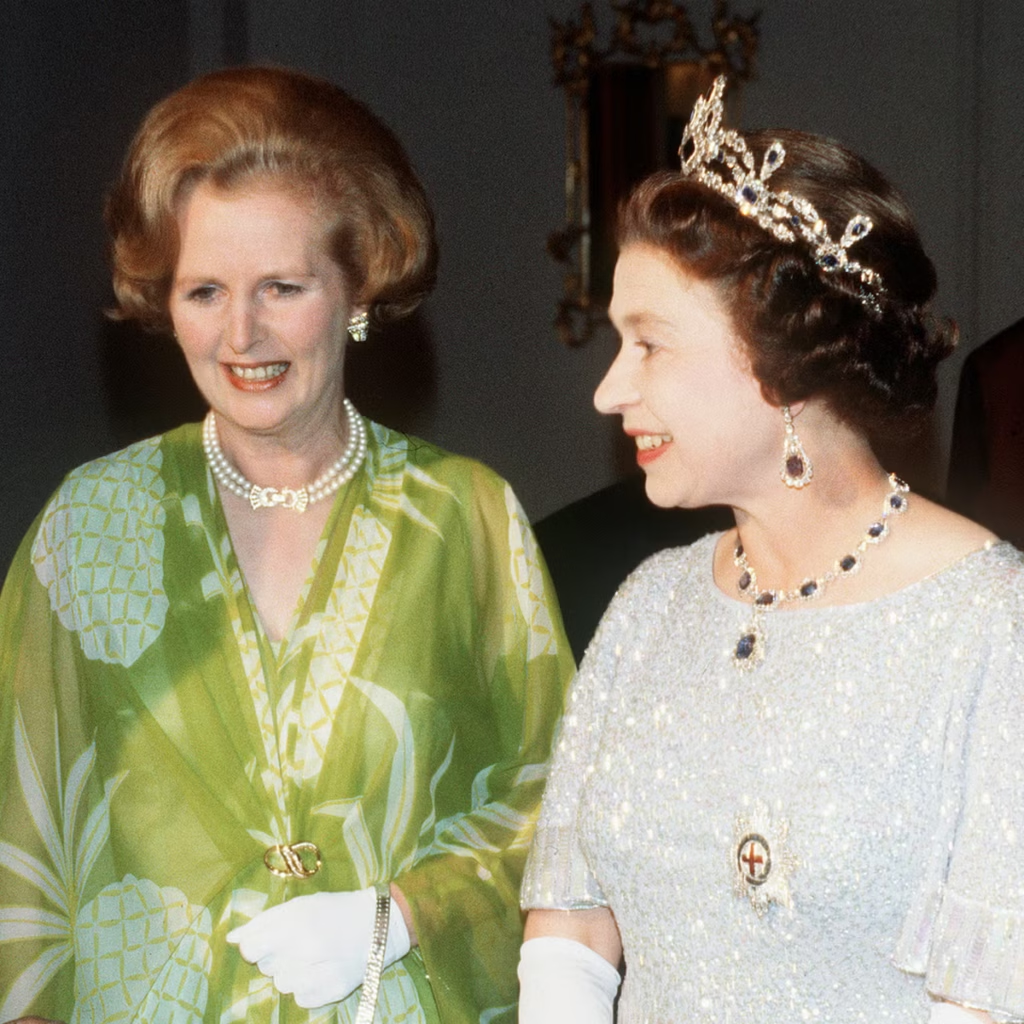
With both leaders born just six months apart in 1925, the global public might have expected a natural sisterhood between them. However, the reality of their relationship behind the palace walls was a highly complex dance of strict protocol, clashing ideologies, and deeply hidden tensions.
A Clash of Backgrounds and Perspectives
Beneath the veneer of two women leading the country, their personal backgrounds could not have been more different. The Queen was born into immense privilege, valuing stability and the quiet endurance of the British Commonwealth. Thatcher, the daughter of a grocer, was a self-made disruptor dedicated to completely overhauling the British economy, which inevitably led to massive societal divides and staggering unemployment rates.
While their weekly audience meetings were constitutionally required and kept strictly confidential, biographers note that their personal relationship was often described as cool or distant. The Queen reportedly felt that Thatcher’s hardline policies lacked the basic compassion needed to care for the less privileged members of society.
Tensions at Balmoral: Extreme Culture Shock
One of the most widely documented friction points between the two icons was Thatcher’s uncomfortable annual stays at the Royal Family’s Balmoral estate in Scotland. The Queen deeply loved the rugged, informal Scottish country life, muddy walks, and outdoor barbecues.
Thatcher, whose middle-class upbringing did not include aristocratic pastimes, struggled to adapt to these casual settings. She often lacked the appropriate attire for outdoor activities, making social interactions awkward and causing the Prime Minister to view the mandatory trips as an absolute chore.
The South Africa Dilemma and Political Divides
Perhaps their most significant political clash occurred in the 1980s regarding South Africa’s apartheid regime. While the Queen, as Head of the Commonwealth, was deeply concerned that Thatcher’s firm opposition to imposing sanctions might break up the coalition of nations, Thatcher stood her ground firmly. She argued that economic sanctions would only harm the poorest citizens of the country.
This deep ideological divide occasionally led to rare, dramatic moments where royal aides leaked the Monarch’s intense political anxieties to the press, much to the frustration of Downing Street.
Deep Mutual Respect and Exaggerated Protocol
Despite their personal and political friction, both leaders shared a deep, unwavering devotion to their public roles. Thatcher treated the Monarch with such exaggerated deference—often executing exceptionally low, dramatic curtsies—that it actually became a bit of an inside joke among the palace staff.
According to insights from historians of that era, there was never a dramatic public feud between them. Their dealings were always professional and extremely respectful of protocol. Thatcher later acknowledged in her personal memoirs that the Queen’s flawless grasp of current issues and breadth of experience were invaluable to her premiership.
The Final Verdict and Royal Honors
The true testament to their underlying bond emerged later in life. Upon Thatcher’s resignation in 1990, the Queen immediately invited the former Prime Minister to a horse race and later bestowed upon her the prestigious Order of Merit.
In a highly unusual and historic breach of royal protocol, the Queen even attended Lady Thatcher’s formal funeral in 2013—a profound tribute she had previously only extended to Sir Winston Churchill. While they frequently disagreed on how Great Britain should be run, Queen Elizabeth II and Margaret Thatcher shared a mutual, profound respect as formidable women making history in a man’s world.