The Pointe Shoes She Left Behind: Princess Diana’s Forgotten Dream and Her Secret Language of Grace
A Hidden World of Silk Ribbons
When we think of Princess Diana, our minds immediately flood with historic images of the “People’s Princess” walking through active minefields, hugging patients at healthcare facilities, or turning heads in her iconic “revenge dress.” She was a masterclass in public empathy and modern royal style. However, long before she stepped onto the grand world stage, Diana’s heart belonged to a completely different world—one of silk ribbons, resin dust, and classical music.
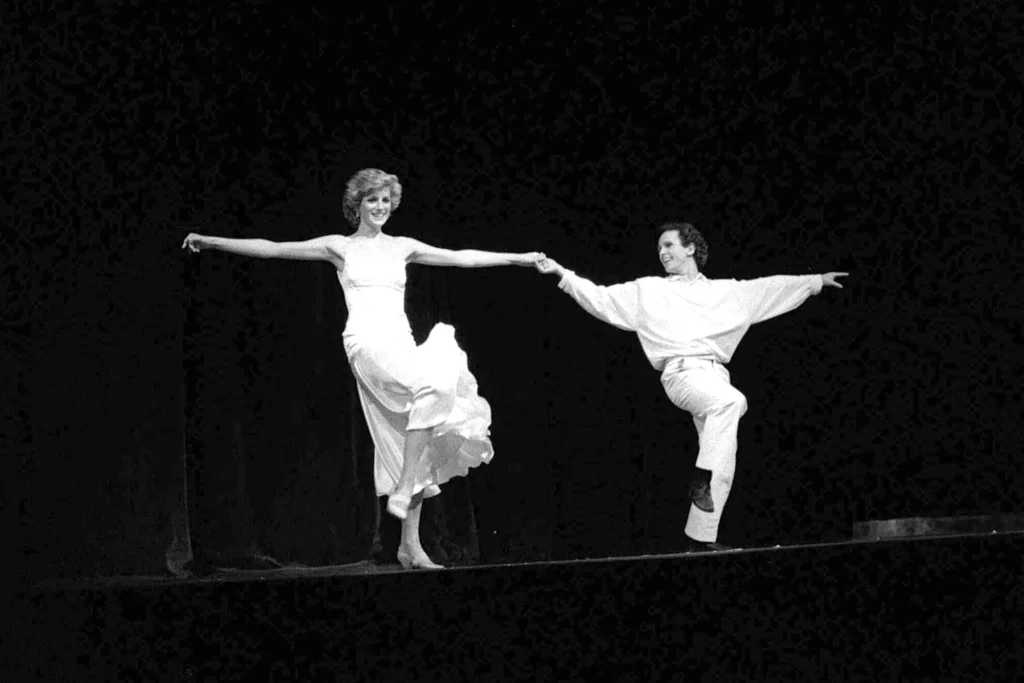
A lesser-known fact about the beloved Princess is that her first true love was not philanthropy, nor fashion, but classical ballet. As a young girl, Diana dreamed of becoming a professional ballerina with the Royal Ballet. She trained rigorously for years, finding solace and pure emotional expression in the strict, silent discipline of the dance floor.
The Cruel Twist of Biological Reality
Yet, this beautiful childhood dream was brutally cut short by a simple, unchangeable biological reality: she grew too tall. Standing at nearly 5 feet 10 inches (1.78 meters), Diana quickly surpassed the maximum height limit allowed for professional female ballet dancers during that era. Her body, built beautifully for a future fashion icon, completely rejected her deepest artistic aspiration.
This forgotten chapter of Diana’s youth is not just a quirky piece of palace trivia; it offers a profound window into her psychological makeup and how she later navigated the rigid British Royal Family.
The Grace of Non-Verbal Communication
Ballet is entirely storytelling without a single word. Dancers convey intense emotion, deep grief, joy, and raw vulnerability purely through posture, stance, and subtle facial expressions. When Diana joined the Royal Family and found herself suffocated by cold protocols and a lack of emotional support, she relied heavily on this exact artistic training.
Her famous “shy glance,” the elegant way she tilted her head, and how she leaned in to connect with sick children on their exact level were the precise tools of a trained dancer communicating directly with her audience, completely bypassing the heavy royal press machinery.
Channeling Disappointment into Duty
To have a life-defining dream taken away at such a young age requires immense emotional resilience. Instead of letting the disappointment make her bitter, Diana channeled that passionate creative energy outward into the world. The absolute dedication, grueling work ethic, and emotional depth required in ballet were directly transferred into her legendary humanitarian work.
Even though she could never perform on the professional stage, Diana never turned her back on her first love. She became a dedicated patron of the English National Ballet, using her immense global star power to raise millions of pounds for the company. Her private dance teacher later revealed that even during her most turbulent marital years with Charles, Diana would book secret, late-night dance studios just to put on her pointe shoes and dance out her stress and sorrow in total privacy.
The Ultimate Transatlantic Irony
There is a poignant irony in Diana’s story. The very physical trait that disqualified her from the professional ballet world—her striking, tall stature—was exactly what made her a commanding, unforgettable, and magnetic presence on the global stage.
When we analyze Princess Diana’s legacy today, we shouldn’t just see a woman who married a prince; we should see a passionate artist who had to redesign her entire life because of a cruel twist of fate. She didn’t leave ballet behind; she simply turned the entire world into her stage.